
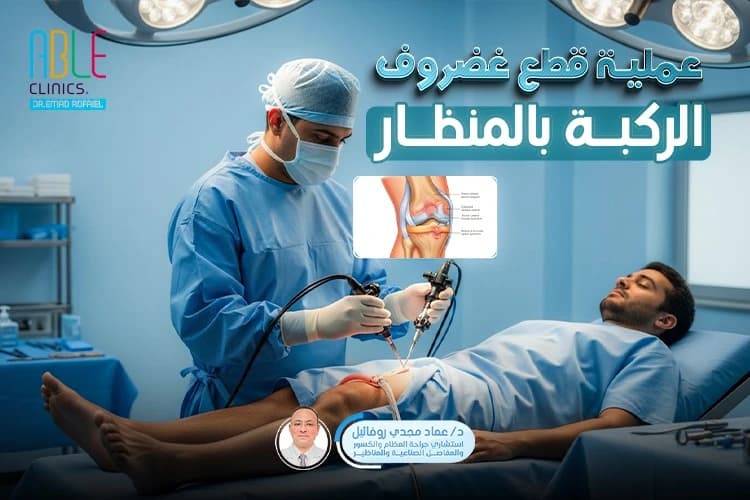
Meniscus tears in the knee are conditions that cause significant pain and severely restrict movement. In certain cases, the optimal solution is "Arthroscopic Meniscectomy" (meniscus trimming). This precise surgical procedure is used to remove the damaged part of the cartilage, granting the patient rapid relief and enabling a return to normal life.
Important Notice: This article is for educational purposes only. You must consult a specialized physician to determine the most appropriate treatment option for your condition.
What is the Knee Meniscus and Why Does It Tear?
The meniscus (meniscal cartilage) is a flexible, C-shaped tissue located between the thigh bone (femur) and the shin bone (tibia).
Its primary function is to act as a shock absorber and provide stability to the knee joint. It can tear as a result of sudden twists during sports, accidents, or even natural wear and tear associated with aging.
When is Arthroscopic Meniscectomy the Optimal Solution?
Not all cartilage tears require surgery. Doctors resort to arthroscopic meniscectomy in cases where the tear is located in an area that cannot heal naturally or when the tear causes persistent symptoms such as:
-
Severe pain that does not subside with rest.
-
A sensation of the knee "locking up," where it cannot be fully straightened.
-
Recurrent joint swelling.
-
Difficulty walking or climbing stairs.
Preparing for Meniscus Trimming Surgery
Before surgery, your doctor will give you clear instructions. It is important to follow them to ensure the procedure goes smoothly. These instructions may include:
-
Performing medical check-ups and blood tests.
-
Informing the doctor of all medications you are taking, as you may need to stop some of them.
-
Fasting from food and drink for several hours before the scheduled time.
Steps of Arthroscopic Meniscectomy
This procedure is considered one of the quickest surgical interventions, usually taking less than an hour:
-
Anesthesia: The patient is given either general or regional (spinal/epidural) anesthesia, according to the doctor's assessment.
-
Surgical Incisions: The surgeon makes two very small incisions (about 1 cm) in the knee.
-
Tool Insertion: The arthroscope (a tiny camera) is inserted through one incision, and precise surgical instruments are inserted through the other.
-
Cartilage Trimming: The surgeon identifies the torn portion of the meniscus and carefully trims (cuts) it out, preserving the healthy parts as much as possible.
-
Closure: After completion, the instruments and arthroscope are removed, and the small surgical incisions are closed with medical dressings.
Recovery After Surgery: Timeline and Guidelines
The recovery period from this procedure is much faster than open surgery, but it requires commitment.
-
Going Home: The patient can usually return home on the same day.
-
Walking: In most cases, the patient can walk immediately, with or without crutches, as recommended by the doctor.
-
Therapeutic Exercises: Physical therapy is the cornerstone of recovery. It will help you regain range of motion, strengthen the muscles surrounding the knee, and return to your activities.
-
Return to Activities: You can return to desk work within a few days, but returning to sports activities may take a few weeks or months, after the doctor's approval.
Benefits and Risks of Meniscectomy
Benefits:
-
Less Pain: Small incisions cause less pain and have lower risks of infection.
-
Rapid Recovery: Allows the patient a quick return to activities.
-
High Precision: Provides excellent visibility for the surgeon to perform the operation accurately.
Risks:
-
Nerve or Blood Vessel Damage: A rare but possible risk.
-
Blood Clots (DVT): A small risk that can be minimized by early movement.
-
Persistent Pain: In some cases, the pain may not disappear completely.
Factors Determining the Cost of the Procedure
The cost of the procedure varies significantly depending on several factors, including:
-
The surgeon's experience and reputation.
-
The hospital or medical center where the procedure is performed.
-
The type of anesthesia used.
-
The patient's health insurance.
In conclusion, arthroscopic meniscectomy is a safe and effective procedure that can end the patient's suffering from pain and allow them to regain their mobility. Adhering to the doctor's instructions and good post-operative follow-up are key to ensuring the best results and full recovery.